Quantum Computing Approaches Its 'ChatGPT Moment' as Cybersecurity and Finance Draw Multi-Billion-Dollar Valuations
Quantum computing is racing toward commercial viability, with industry executives pointing to 2028-2031 as the tipping point for processing power and massive enterprise applications.
 🏢Companies
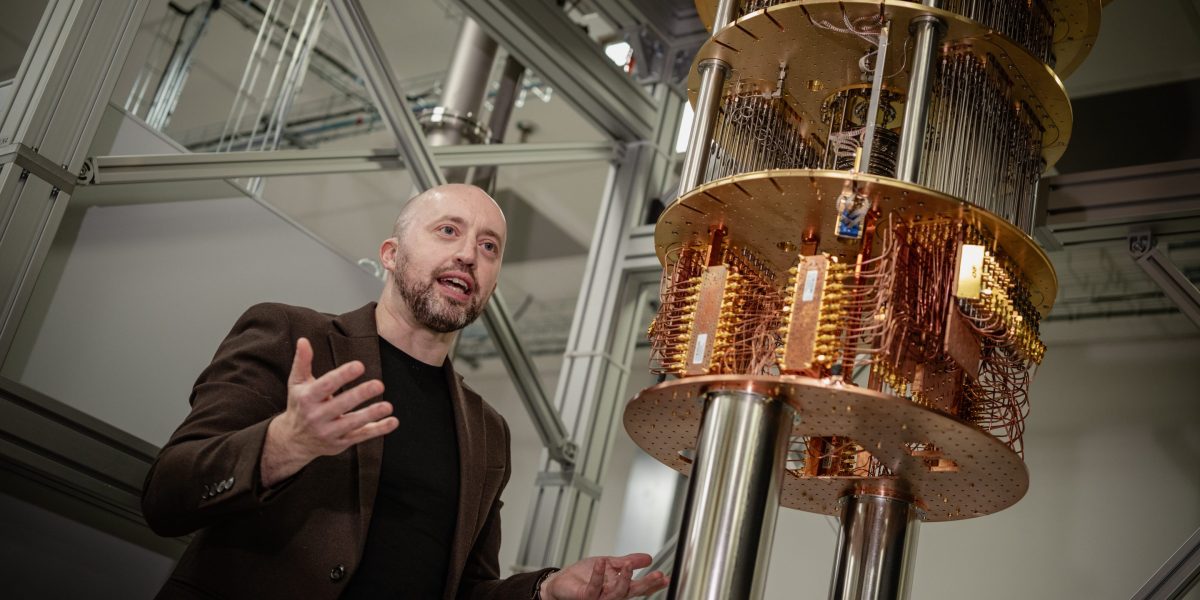
Photo: Fortune
Key points
- Quantum computers utilize qubits capable of superposition, enabling vastly superior processing speeds compared to classical binary systems.
- Oxford Quantum Circuits secured £260 million ($345 million) in June for European market expansion.
- Industry experts project error-free operational thresholds will reach millions of steps between 2028 and 2031.
Quantum computing is rapidly advancing toward a commercial tipping point that could fundamentally transform cybersecurity, finance, and data processing. Unlike traditional computers that rely on binary bits of zeros and ones, quantum systems utilize qubits capable of superposition, performing complex calculations at speeds far beyond classical architectures. Major tech giants including IBM, Google, and Microsoft have established dedicated quantum divisions, while pure-play operators such as D-Wave Quantum, Rigetti Computing, and IonQ command valuations in the billions.
Investment activity is expanding globally, highlighted by Oxford Quantum Circuits securing £260 million ($345 million) in a C-series funding round this June. According to industry leaders, early commercial use cases will center on network vulnerability analysis, threat detection, and identifying rogue agents. Gerald Mullally, CEO of Oxford Quantum Circuits, noted that quantum technology shifts data analysis to a higher dimensional plane, greatly enhancing fraud detection and anti-money laundering efforts in financial services.
Despite persistent engineering hurdles such as qubit sensitivity to temperature fluctuations and atmospheric pressure requiring costly isolation chambers, error-correction capabilities are improving. Current algorithms execute roughly a thousand steps before succumbing to errors, but experts project that threshold will expand to millions of steps between 2028 and 2031. This leap will mark quantum computing's equivalent to the generative AI boom, providing corporations with both advanced defensive capabilities against encryption threats and a distinct commercial advantage.
What to watch next: Monitor upcoming funding rounds in the quantum sector and milestones in error-correction benchmarks leading toward the 2028-2031 window.
Source Fortune — fortune.com/2026/11/12/catching-rogue-agents-and-preventing-cyberattack… ↗
Read next
 📈Markets
Sandisk Shares Lag Despite Strong Earnings Amid NAND Cycle Skepticism
Sandisk stock has underperformed recently despite posting strong earnings, highlighting investor doubts about how long the current NAND memory cycle will last.
 📈Markets
Boeing Targets $10 Billion Cash Flow as Production Ramp Points to Valuation Upside
Boeing is aiming for $10 billion in annual free cash flow driven by higher production rates across its 737 MAX, 787, and 777X programs, which could elevate its market cap…
 💼Investing
IREN Eyes $4 Billion Operating ARR by Q3 2027 Following First-Quarter Figures
IREN Limited shared its fiscal first-quarter 2027 results, highlighting a projected surge in operating annual recurring revenue.
 📈Markets
AMD Investment Thesis Strengthens Following Recent Market Shifts
Advanced Micro Devices shares have experienced notable movement since an analyst rating downgrade in early October, prompting a reassessment of the semiconductor company'…
 📈Markets
SpaceX Stock Fluctuates as AI Division Becomes Primary Revenue Driver
SpaceX shares trade near $140 following a volatile public market debut, driven largely by explosive growth in its artificial intelligence segment rather than traditional …
 📈Markets
Navigating the Oil Sector: Understanding Volatility, Long-Term Growth, and Key Industry Players
The petroleum sector remains a multi-trillion-dollar industry despite ongoing volatility, offering both long-term asset security and unique operational challenges across …